How to Back Up a Boat Trailer
Backing up a boat trailer can be intimidating for new boat owners and frustrating even for experienced boaters. Unlike backing up a vehicle, a trailer responds differently to steering inputs, often causing confusion and overcorrection. Add in a crowded boat ramp, impatient spectators, and the pressure of launching or retrieving your boat efficiently, and it's easy to understand why many boaters dread the process.
The good news is that backing a trailer is a skill that can be learned and improved with practice. By understanding a few basic principles, preparing properly, and developing good habits, you'll gain the confidence needed to maneuver your trailer smoothly and safely. Whether you're launching at a busy marina or backing into storage, these tips can help you take control and back up your boat trailer like a pro.
Safety First
Before focusing on technique, make safety your top priority. Boat ramps, parking lots, storage yards, and launch areas can be busy environments with pedestrians, vehicles, and other boaters moving around. Taking a few extra moments to assess your surroundings before backing up can help prevent accidents, damage, and unnecessary stress.
Always perform a quick walk-around of your vehicle and trailer before reversing. Check for obstacles, verify that your trailer is properly connected, and make sure any passengers or helpers know where they should stand. If you're using a spotter, establish clear hand signals or verbal communication before you begin moving.
Remember that there is no prize for backing up quickly. Experienced boaters focus on control, awareness, and patience rather than speed. If something doesn't feel right, stop, reassess, and start again. Taking an extra minute is always preferable to damaging your boat, trailer, vehicle, or someone else's property.
Use a Spotter: This can be one of the most valuable tools during the backing process. An extra set of eyes can help identify obstacles, monitor trailer alignment, and communicate adjustments before small mistakes become bigger problems. Clear communication between driver and spotter helps create a safer, more controlled experience at the ramp.
The Basics: Understanding Backing Up a Boat Trailer
The most important concept to understand is that a trailer moves opposite of your steering wheel when reversing. Because the trailer pivots at the hitch ball, turning the steering wheel right causes the trailer to move left, while turning the wheel left causes the trailer to move right.
This often feels counterintuitive at first, which is why many new boaters struggle with oversteering. The key is to make small, deliberate steering adjustments and allow the trailer time to respond. Once you understand this relationship, backing becomes significantly easier and more predictable.

Trailer Tongues: Understanding the Difference
Not all boat trailers respond the same way when reversing. The design of the trailer tongue affects turning characteristics, maneuverability, and overall control. Understanding your trailer's configuration can help you anticipate how it will react and improve your confidence when backing.
Straight Tongue
Straight tongue trailers are among the most common trailer designs and are frequently used for boat trailers. Their simple design provides predictable handling and allows for relatively responsive steering inputs while reversing.
Because of their straightforward construction, straight tongue trailers are often considered the easiest configuration for new boat owners to learn.
Extended Tongue
Extended tongue trailers provide additional distance between the tow vehicle and trailer. This extra length often improves visibility, increases turning clearance, and can make launching and retrieving easier at certain ramps.
Many boaters appreciate extended tongues because they provide additional control and flexibility when maneuvering in tight areas.
A-Frame Tongue
A-frame tongues use a triangular design that connects to the trailer frame at two points rather than one. This design provides additional strength, stability, and improved weight distribution, making it popular for larger boats and heavier trailers.
While an A-frame trailer may react slightly slower to steering inputs than a straight tongue design, it often provides greater stability and control during backing maneuvers.
V-Bend Tongue
V-bend tongues are designed to improve clearance and maneuverability while helping distribute weight efficiently. Because the pivot characteristics can differ from traditional tongue designs, it's important to spend time practicing with your specific trailer setup.
Understanding how your trailer responds before arriving at a busy boat ramp can make the backing process much less stressful.
Preparing Before You Reverse
A little preparation before you begin reversing can make a significant difference in how smoothly the process goes. Taking a few minutes to assess conditions, adjust your equipment, and develop a plan often helps prevent mistakes and unnecessary frustration.
Remember the fundamentals discussed earlier: prioritize safety, remain aware of your surroundings, and use a spotter whenever possible. These simple habits can make backing your trailer safer and significantly less stressful.
Check your Surroundings
Before backing up, walk the area and identify potential obstacles such as vehicles, pedestrians, curbs, dock pilings, or other boats. Understanding your surroundings allows you to develop a plan before putting the vehicle in reverse.
Remember the fundamentals discussed earlier: prioritize safety, remain aware of your surroundings, and use a spotter whenever possible.
Adjust Your Mirrors
Proper mirror adjustment is critical when towing a boat trailer. Your mirrors should provide a clear view down both sides of the trailer while minimizing blind spots.
For the best visibility:
- Adjust side mirrors outward to maximize your field of view.
- Utilize convex mirrors if available.
- Angle mirrors to monitor both the trailer and surrounding area.
- Verify visibility before beginning the maneuver.
Use Technology When Available
Backup cameras, trailer cameras, parking sensors, and trailer-assist technologies can provide valuable assistance when maneuvering in tight spaces.
While technology should never replace good judgment or proper technique, it can provide additional awareness and confidence when backing a trailer.

Mastering Trailer Control
Once you understand how your trailer responds and have properly prepared your setup, it's time to focus on the techniques that create smooth, controlled movements. Like most boating skills, trailer backing becomes easier with repetition and experience. The goal isn't perfection—it's maintaining control, making small corrections, and understanding how your trailer reacts to your steering inputs.
Practice in an Open Area
One of the best ways to build confidence is to practice away from the pressure of a busy boat ramp. Empty parking lots, open fields, and other spacious areas provide room to learn without worrying about obstacles or other boaters waiting behind you.
Start with simple maneuvers such as backing in a straight line and making gradual turns. As your confidence improves, increase the difficulty by practicing tighter turns and positioning the trailer within marked spaces.
Use Small Steering Inputs
One of the most common mistakes new boaters make is oversteering. Large steering movements often cause the trailer to react too quickly, leading to a cycle of constant corrections.
Instead, make small adjustments and allow the trailer time to respond. Remember:
- Turn the wheel in the direction you want the trailer to move.
- Make gradual corrections rather than large steering changes.
- Pause briefly after each adjustment to evaluate the trailer's movement.
- Pull forward and reset if the trailer becomes difficult to control.
Smooth, deliberate steering almost always produces better results than aggressive corrections.
Use Reference Points
Experienced boaters often use visual reference points to help maintain alignment and judge distances. Dock pilings, lane markings, cones, curbs, or other fixed objects can provide helpful guidance while backing.
These visual references can help you better understand the trailer's position and make more precise corrections as you maneuver.
Slow and Steady Wins Every Time
Backing up too quickly is one of the fastest ways to lose control of a trailer. Slow speeds provide more time to react, make adjustments, and avoid overcorrecting.
If the trailer begins moving off course, remain calm and make small corrections. If necessary, stop, pull forward, and reposition before continuing. Even experienced boaters occasionally reset their approach rather than trying to force a difficult maneuver.
Patience and control will almost always produce better results than rushing the process.
Launching and Retrieving Your Boat
Launching and retrieving your boat is where all of your trailer backing skills come together. While every boat ramp is different, the fundamentals remain the same: preparation, communication, patience, and control.
Before You Reach the Ramp
Many experienced boaters complete as much preparation as possible before entering the launch lane. This helps reduce congestion and allows for a smoother launch experience. Being prepared before entering the launch area helps keep the process efficient and stress-free.
Before approaching the ramp:
- Inspect your trailer and boat.
- Prepare dock lines and fenders.
- Remove travel covers and transom straps.
- Confirm the drain plug is installed.
- Review responsibilities with passengers or crew.
Launching Your Boat
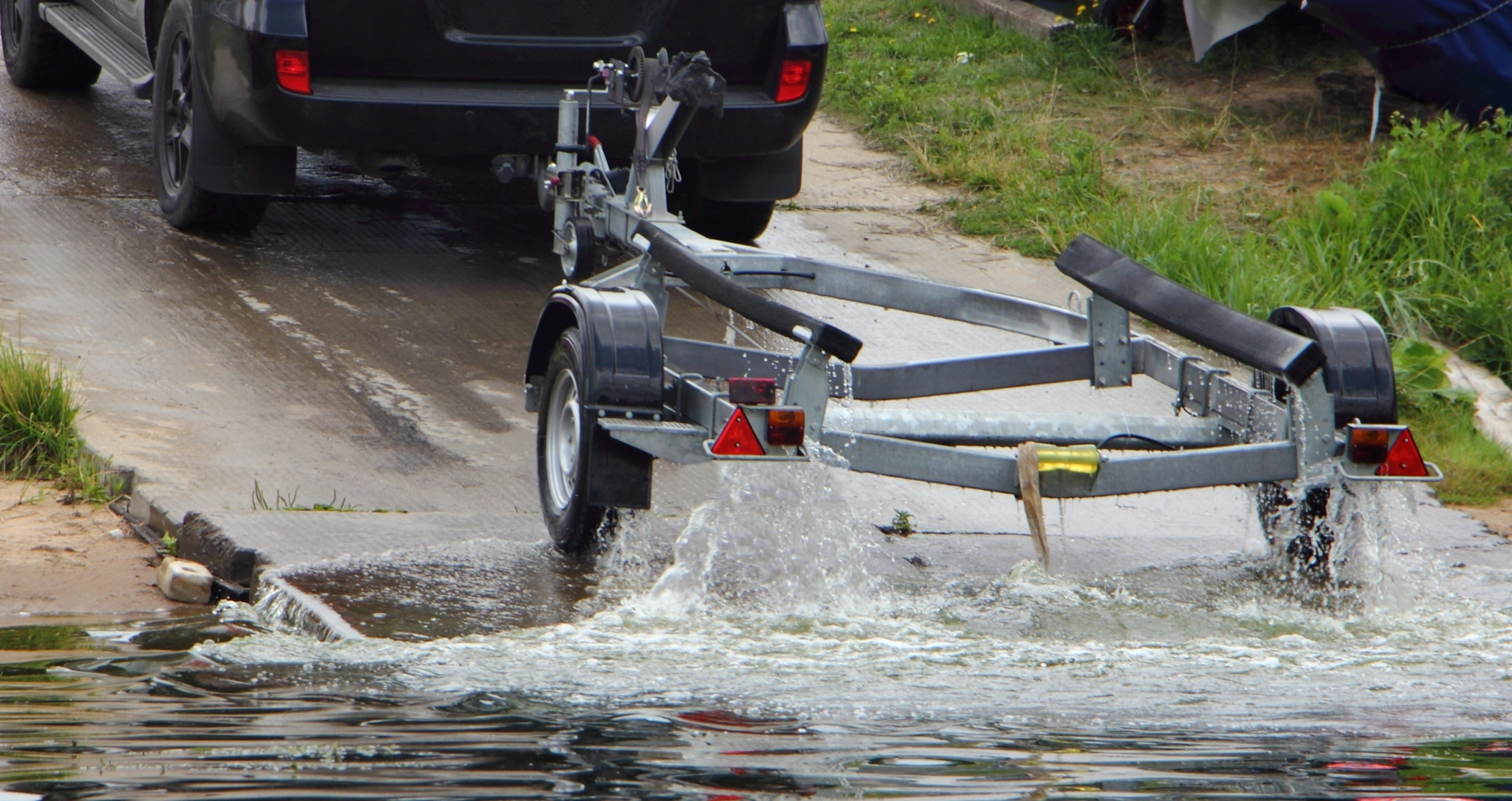
When it's time to launch, align your vehicle and trailer with the ramp and begin backing slowly. Use your mirrors, spotter, and reference points to maintain control and keep the trailer centered.
Once the boat is floating, secure it appropriately before moving your vehicle to a designated parking area. Taking your time during this process helps prevent mistakes and allows everyone involved to work safely.
Retrieving Your Boat
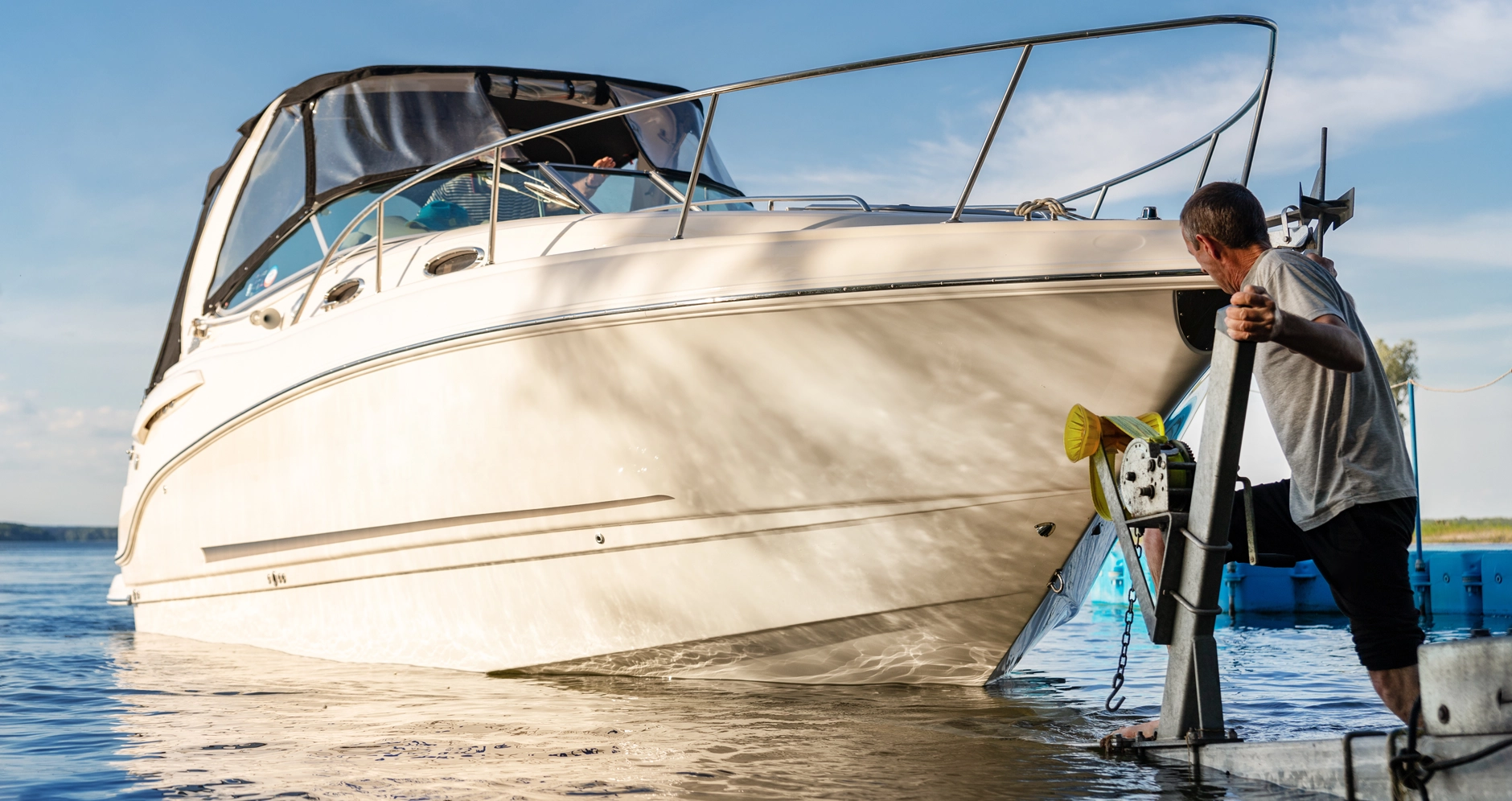
Retrieving the boat follows many of the same principles. Position the trailer properly, maintain alignment, and guide the boat onto the bunks carefully. Once the boat is fully seated on the trailer, secure it before leaving the ramp.
Rushing retrieval is one of the most common causes of launching and loading frustrations. A slow, methodical approach typically produces the best results.
Troubleshooting Common Issues
Even experienced boaters occasionally encounter challenges when backing a trailer. The good news is that most issues can be corrected by slowing down, making small adjustments, and understanding how the trailer is reacting.
Jackknifing
Jackknifing occurs when the trailer angle becomes too severe relative to the tow vehicle, making it difficult to regain control of the trailer's direction.
If you find yourself approaching a jackknife situation:
- Stop immediately.
- Pull forward to straighten the trailer.
- Reposition and begin the maneuver again.
- Avoid large steering corrections that can worsen the angle.
Recognizing a developing jackknife early is often the easiest way to prevent it from becoming a bigger problem.
Trailer Sway
Trailer sway, sometimes called fishtailing, occurs when the trailer begins moving side to side rather than tracking directly behind the tow vehicle. Improper weight distribution, excessive speed, strong winds, or abrupt steering movements can all contribute to sway.
To help minimize trailer sway:
- Ensure weight is distributed properly on the trailer.
- Secure the boat and gear correctly.
- Drive at appropriate speeds.
- Avoid sudden steering inputs.
A properly loaded trailer is generally more stable and easier to control both on the road and at the ramp.
Limited Visibility
Visibility challenges are common when towing larger boats, particularly in crowded marinas, narrow driveways, and busy launch areas.
To improve visibility:
- Properly adjust your mirrors before reversing.
- Use a spotter whenever possible.
- Take advantage of backup cameras and trailer cameras if available.
- Exit the vehicle and reassess if you're unsure of your surroundings.
There is no downside to stopping and taking a second look. A few extra moments can help prevent costly mistakes and improve safety for everyone nearby.
Practice Makes Perfect
Like most boating skills, backing up a boat trailer becomes easier with repetition. Even experienced boaters occasionally need to pull forward, reset, and try again. The key is developing confidence through practice and learning how your specific vehicle and trailer respond in different situations.
Spending time practicing in an empty parking lot or open area can help build valuable muscle memory before arriving at a busy boat ramp. The more familiar you become with your trailer's movements and turning characteristics, the more comfortable and efficient you'll be when it's time to launch or retrieve your boat.
Final Thoughts
Learning how to back up a boat trailer is one of the most valuable skills a boat owner can develop. While it may feel challenging at first, understanding the fundamentals, preparing properly, and practicing consistently can dramatically improve your confidence and control.
Every experienced boater started exactly where you are now. With patience, repetition, and the right techniques, you'll soon find yourself approaching the ramp with greater confidence and maneuvering your trailer with the precision of a seasoned boater.
The more time you spend practicing, the more natural the process becomes. Before long, backing up your boat trailer will feel less like a challenge and more like just another part of a successful day on the water.

