Kingfish Fishing: Catching King Mackerel on the Gulf
When it comes to high-speed runs, screaming drags, and pure offshore adrenaline, few fish deliver like the Kingfish. Also known as King Mackerel, this powerful pelagic predator is one of Florida’s most exciting saltwater targets.
Along the Gulf Coast — especially off Port Richey, Tampa Bay, and up toward the Nature Coast — Kingfish are a year-long staple that draw anglers offshore every year. They’re fast, aggressive, and absolutely built for speed. Whether you’re trolling the reefs, slow-rolling live bait, or running nearshore structure, chasing Kings is thrilling.
If you’re ready to hook into one of Florida’s most electric gamefish, here’s everything you need to know.
What Is a Kingfish (King Mackerel)?
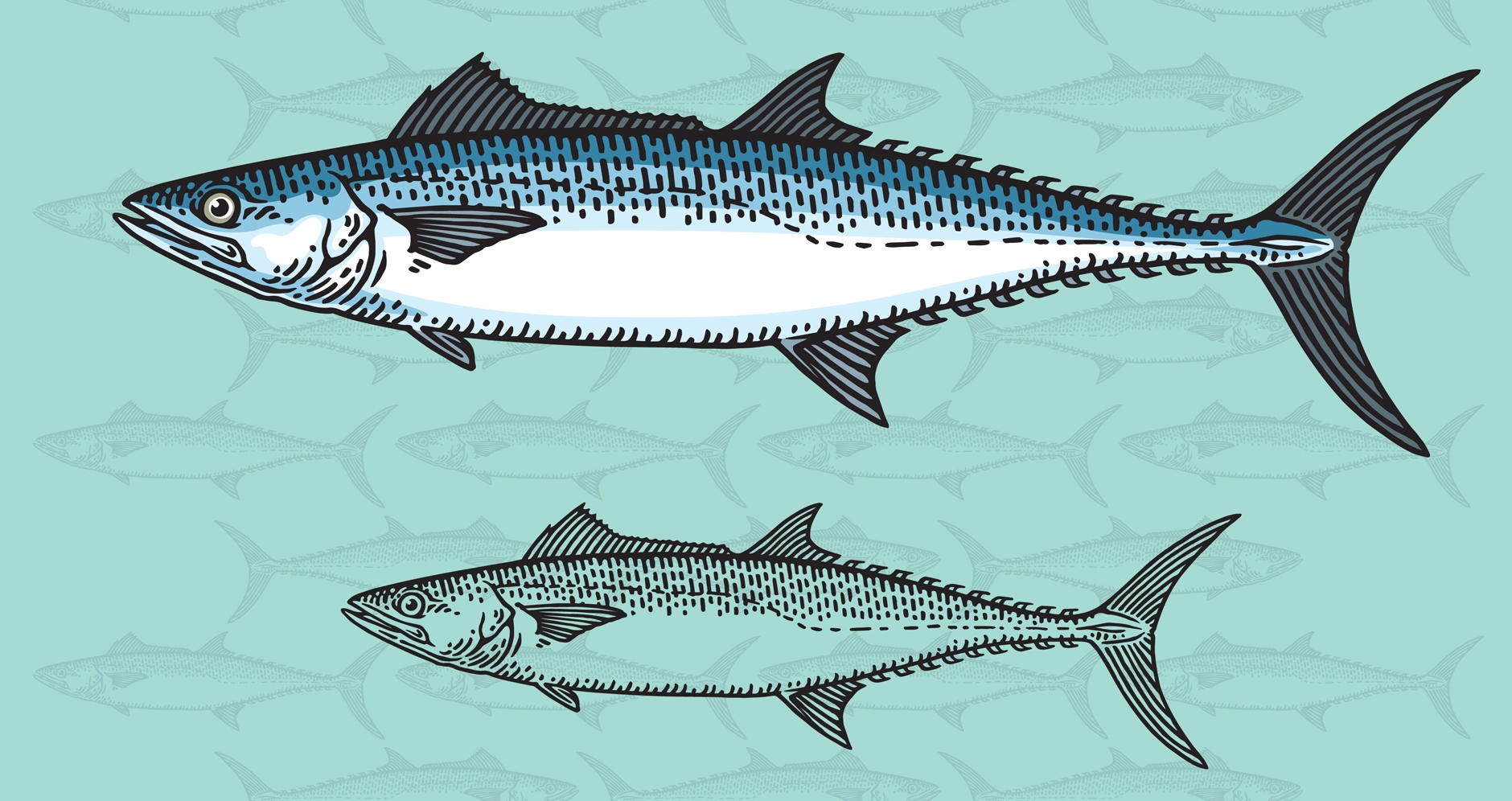
Kingfish, scientifically known as Scomberomorus cavalla, are long, streamlined members of the mackerel family. They’re built like torpedoes — narrow body, forked tail, razor-sharp teeth, and pure muscle.
They’re easily recognized by:
- A sleek silver body with a greenish or bluish back
- A deeply forked tail
- A lateral line that dips sharply mid-body
- 2 Dorsal Fins, the 2nd being Darker than the first
Juvenile Kings may show faint spots, but adults are typically clean-sided and metallic in appearance.
What really sets them apart? Speed. Kingfish can hit speeds exceeding 40 mph, which explains the blistering first run they’re known for once hooked.
Kingfish vs. Spanish Mackerel: Don’t Get Confused
It’s common for newer anglers to mistake Kingfish for Spanish Mackerel, especially when the fish is still in the water and moving fast. Both species belong to the mackerel family, both are long and streamlined, and both are capable of quick bursts of speed. But once you know what to look for, telling them apart becomes much easier — and that matters, especially when size limits and bag limits come into play.
Here are the key differences to keep in mind:
- Spanish Mackerel are smaller and covered in distinct yellow spots. Spanish are typically slimmer and more compact, with bright gold or yellow spots scattered along their sides. Adult Spanish rarely exceed 5–7 pounds, and most are much smaller.
- Kings are larger, typically spot-free as adults. Kingfish can grow significantly bigger, with many fish in the 10–30 pound range and some exceeding 50 pounds. While juvenile Kings may show faint spotting, mature fish are generally clean-sided and metallic.
- Kingfish have more pronounced, intimidating teeth. Both species have sharp teeth, but Kings are on another level. Their teeth are larger, more visible, and capable of slicing through monofilament instantly — which is why wire leaders are a must when targeting them.
- The lateral line on a King dips dramatically; Spanish Mackerel’s stays straighter. On a Kingfish, the lateral line makes a noticeable downward curve roughly mid-body. Spanish Mackerel have a more gradual, consistent lateral line without that sharp dip.
Behavior can also be a giveaway. Spanish Mackerel tend to school tightly and strike aggressively nearshore, often hitting fast-moving lures. Kingfish, on the other hand, are more likely to be found slightly farther offshore, targeting larger bait and making long, powerful runs when hooked.
And of course, there’s the fight. If it makes a screaming run offshore, peels line in seconds, and tests your drag immediately — odds are you’ve hooked a King.
Where to Find King Mackerel on Florida’s Gulf Coast
Kingfish are highly migratory, and understanding how they move throughout the year is one of the biggest keys to consistently finding them. Unlike reef fish that may hold in one area for months, King Mackerel follow temperature changes, bait concentrations, and seasonal currents. If you learn to think like a Kingfish — tracking water temps, bait schools, and structure — your odds of hooking up improve dramatically.
On Florida’s Central Gulf Coast, including waters off Port Richey, Tarpon Springs, Clearwater, and Tampa Bay, the Kingfish bite shifts predictably with the seasons.
Winter Movement
In winter, many Kings slide farther south or push into deeper offshore waters as Gulf temperatures drop. While they don’t completely disappear, they become less concentrated and more dependent on stable water conditions. In particularly cold winters, the better numbers may be found well offshore where temperature swings are less dramatic.
That said, some Kings remain scattered in the Central Gulf when water temps stay mild. Your best bet during winter is to focus on areas that provide both structure and warmth.
If you’re fishing the Gulf off Port Richey in winter, prioritize:
- Bait schools on your electronics – Winter fish won’t stay long where bait isn’t present. Watch your sonar closely for suspended bait pods.
- Temperature breaks – Even a 1–2 degree difference can concentrate fish. Kings often cruise along these thermal edges.
- Reef edges and hard bottom – Structure creates current breaks and attracts bait.
- Areas where current pushes over structure – Moving water oxygenates and activates feeding behavior.
No bait usually means no Kings — especially in winter when they’re conserving energy and feeding strategically.
Spring Migration
Spring marks the beginning of the Kingfish push north along Florida’s Central Gulf Coast. As water temperatures climb into the upper 60s and low 70s, Kings begin staging and moving closer to our local waters. This migration typically accelerates in April and May.
By late spring, anglers off Port Richey, Clearwater, and Tampa Bay often begin seeing solid numbers. Nearshore reefs, artificial structure, and bait-rich areas start producing steady action.
During this time, Kings are aggressive and actively feeding after winter. They’ll often:
- Follow large bait schools
- Hold near passes and shipping channels
- Travel along reef lines and depth transitions
Spring can offer excellent trolling action, especially when threadfins and cigar minnows are thick. Keep an eye on water clarity and temperature — warming trends usually trigger stronger bites.
Summer Pattern
Summer brings consistency. Water temperatures stabilize, bait is abundant, and Kingfish settle into predictable holding areas. This is when many Gulf Coast anglers really dial in their pattern.
During summer, Kings commonly hold around:
- Offshore reefs and artificial structure
- Wrecks and ledges
- Depth changes in 40–120 feet of water
- Hard-bottom patches holding bait
They tend to roam structure edges, cruising for schools of threadfin herring, blue runners, and other forage fish. When bait stacks up thick, Kings won’t be far behind.
Nearshore fishing can also be excellent in summer when bait pushes close to the beach. On calm mornings, slow trolling just a few miles offshore can produce steady action. Summer also brings more boat traffic, so early mornings and late afternoons often provide the best bite windows.
Fall Run
Fall is widely considered prime time for Kingfish along Florida’s Gulf Coast. As water temperatures begin to cool slightly, baitfish schools grow dense and predictable. Kings sense the seasonal shift and feed aggressively before beginning their southern migration.
This is when:
- Tournament anglers focus heavily on Kingfish
- Larger “smoker” Kings become more common
- Bait schools concentrate along reefs and piers
- Nearshore action heats up dramatically
Kings often push closer to shore in fall, sometimes holding surprisingly tight to beaches and pier structures. It’s not uncommon to see boats trolling just off local piers when the fall run is in full swing.
Off Port Richey and surrounding waters, fall can produce some of the most exciting Kingfish action of the year. Big fish, aggressive feeding, and cooler conditions make it a favorite season for serious anglers.
Understanding these seasonal shifts allows you to adjust your strategy rather than fishing the same way year-round. Follow the temperature, follow the bait, and pay attention to structure — and you’ll dramatically increase your odds of hooking into one of the Gulf’s fastest predators.
Kingfish Regulations in Florida
Before heading offshore to target King Mackerel (also called Kingfish), it’s essential to know the current Florida saltwater fishing regulations — and to always double-check before you go, because rules can change. For recreational anglers fishing from private boats or shore in Gulf state waters, the regulations are set by the Florida Fish and Wildlife Conservation Commission and aligned with federal standards.
Here’s how the rules stand for Kingfish in Florida’s Gulf waters:
- Minimum size: 24 inches fork length — This means the fish must be measured from the tip of the snout to the fork of the tail — not total length. Measuring correctly ensures you’re harvesting legal fish and protecting younger breeders.
- Daily bag limit: 3 per person — In state-managed waters of the Gulf of Mexico, the recreational bag limit for King Mackerel is three fish per person per day, unless federal regulations reduce the limit. This aligns with Gulf Council and FWC rules designed to support sustainable fisheries.
- Season: Open year-round — There is no closed season for King Mackerel in Florida’s Gulf state waters — meaning anglers can harvest them any time of year as long as size and bag limits are followed.
- Legal Gear: Hook and Line & Spearing Only — These are the approved methods for taking Kingfish recreationally. Gear that injures fish excessively or harvests too many at once (such as gill nets) is prohibited in state waters.
A couple of additional notes that are good for anglers to keep in mind:
- If federal waters adjacent to Florida close to all harvest (due to quota closures or other fishery management actions), the recreational bag limit in state waters can be reduced (sometimes to 1 fish per person), so always check current closures before you head offshore.
- Kingfish must be kept in whole condition with heads and fins attached until you land ashore — this helps enforcement officers verify legal size and species at the dock.
These regulations help maintain healthy Kingfish populations in the Gulf while still offering anglers strong opportunities year-round.
Best Techniques for Catching Kingfish
There’s more than one way to hook a King, but certain methods consistently outperform others depending on conditions, bait availability, and fish behavior. Kingfish are opportunistic, aggressive predators — but they can also be selective when pressured. Success often comes down to presenting bait naturally, covering water efficiently, and adjusting to what the fish are doing that day.
Here are the techniques that consistently produce along Florida’s Gulf Coast.
Slow Trolling Live Bait
This is widely considered the most productive and reliable method for targeting King Mackerel. When bait is available, slow trolling live bait gives you the most natural presentation and consistently draws the hardest strikes.
Popular live baits include:
- Threadfin herring
- Blue runners
- Pilchards
- Cigar minnows
The key is to troll slowly — typically 1 to 2 knots — just fast enough to keep the bait swimming upright and lively. Too fast and the bait will spin or tire out. Too slow and it may struggle unnaturally.
Most experienced King anglers rig live bait on a wire stinger rig, which includes:
- A lead hook (usually single) placed through the nose
- A trailing treble hook lightly pinned near the dorsal area
This wire setup prevents bite-offs from those razor-sharp teeth. Since Kings often strike from behind, slashing through bait before committing, that trailing stinger dramatically improves hookup ratios.
Pro tip: Stagger your baits at different depths and distances from the boat. Some days Kings prefer surface baits; other days they’ll hit slightly deeper presentations. Covering the water column increases your chances.
Fast Trolling Dead Bait
When live bait isn’t available — or when you need to cover water quickly — trolling rigged dead bait can be extremely effective.
Common dead baits include:
- Cigar minnows
- Ribbonfish
- Squid
Dead bait is typically trolled faster than live bait, often around 4 to 6 knots, depending on sea conditions. Proper rigging is critical. The bait must swim straight and natural — any spinning or wobbling will turn fish off.
Adding a flashy skirt, dusters, or trolling lure ahead of the bait can increase visibility, especially in deeper water or lower visibility conditions. Flash imitates fleeing baitfish and helps Kings locate your offering from a distance.
This method excels when:
- Fish are scattered
- You need to locate roaming schools
- Covering large reef systems
Once you get a strike, you can slow down and work that area more thoroughly.
Free-Lining Near Structure
When Kings are stacked around reefs, wrecks, or hard-bottom areas, sometimes less is more.
Free-lining a live bait — meaning no weight — allows it to swim naturally in the current. This is especially effective when:
- Bait schools are thick
- Fish are actively feeding
- Current is moving steadily over structure
Position your boat up-current of the structure and let the bait drift back naturally. Keep your drag set properly and stay alert — Kingfish strikes are violent and sudden.
This technique is also excellent when you mark fish on sonar but they aren’t responding to trolled baits. Dropping into neutral and presenting a free-swimming bait often triggers reaction bites.
Drone or Kite Fishing
For anglers looking to elevate their Kingfish game, kite fishing or drone deployment offers a major advantage — especially in clear, calm conditions when fish are pressured.
By suspending live bait near the surface away from the boat, you:
- Reduce engine noise impact
- Keep bait from tangling in prop wash
- Present bait naturally in the strike zone
Kite fishing keeps the bait splashing and struggling right on the surface — an irresistible target for Kings cruising below. Drone fishing allows precise placement farther away from the boat.
This technique requires more setup and coordination, but it can be extremely effective when Kings are wary or boat traffic is heavy. It’s particularly useful during tournament season when fish have seen plenty of traditional spreads.
Kingfish fishing rewards adaptability. Some days they’ll crush slow-trolled threadfins all morning. Other days you’ll need to cover ground with fast-trolled ribbonfish before finding a hot zone.
The common thread?
Follow the bait. Match the presentation to conditions. Stay ready for that first screaming run.
Tackle Setup for Kingfish
King Mackerel aren’t just fast — they’re violent strikers with razor-sharp teeth and a reputation for blistering first runs. Your tackle needs to balance three things: speed control, shock absorption, and bite protection. The wrong setup can mean lost fish before the fight even begins.
While you don’t need ultra-heavy offshore gear, Kingfish absolutely demand purpose-built setups.
Choosing the right rod and reel combination sets the foundation for everything that follows. Kingfish don’t just test your line — they test your drag, rod flexibility, and reel capacity all at once. A balanced setup allows you to absorb that first explosive run without losing control or sacrificing power.
Rod & Reel
Choosing the right rod and reel combination sets the foundation for everything that follows. Kingfish don’t just test your line — they test your drag, rod flexibility, and reel capacity all at once. A balanced setup allows you to absorb that first explosive run without losing control or sacrificing power.
Recommended Setup:
- 7 to 8 foot medium-heavy rod
- 5000–8000 size spinning reel or mid-size conventional reel
- Smooth, reliable drag system
A longer rod (7–8 feet) gives you better line control when trolling and helps absorb shock during sudden runs. Medium-heavy power provides enough backbone to control larger “smoker” Kings while still offering flexibility in the tip.
For spinning setups, a 5000–8000 size reel gives you the line capacity needed for long runs. Kings are notorious for dumping 100+ yards of line in seconds. A reel with a smooth, consistent drag system is critical — jerky drag equals pulled hooks.
Conventional reels remain popular among tournament anglers for trolling spreads, but spinning setups offer versatility and are easier for many recreational anglers to manage.
Line
Your line system is what connects you to the fish — and with Kingfish, that connection needs to handle speed, abrasion, and teeth. The right combination of mainline and leader ensures strength without sacrificing presentation. This is not the species to cut corners on.
Mainline:
- 15–30 lb monofilament or
- 20–40 lb braided line
Mono offers stretch, which helps cushion hard strikes and reduces the chance of tearing hooks free during head shakes. Braid provides superior sensitivity and increased line capacity thanks to its thinner diameter — a big advantage when Kings make those long, fast runs.
Leader Setup:
- Short section (2–3 feet) of 40–60 lb fluorocarbon
- Wire leader (single-strand or multi-strand) at the terminal end
Fluorocarbon adds abrasion resistance and invisibility in clear Gulf water. But the critical component is wire. Skipping the wire almost guarantees a bite-off. Kingfish teeth are built to slice cleanly through mono and braid — even heavy fluorocarbon won’t consistently survive.
Single-strand wire is lighter and less visible but requires proper rigging technique. Multi-strand wire is more forgiving and easier for many anglers to work with.
Hooks & Rigs
Terminal tackle is where Kingfish battles are won or lost. These fish often strike violently, slash at bait from behind, and thrash aggressively at boatside. Your hooks and rigging need to account for their attack style, not just their strength.
Standard Kingfish Setup:
- Stinger rigs with treble hooks
- 4X strong hooks
- Quality swivels to prevent line twist
Stinger rigs are essential because Kingfish frequently short-strike. The trailing treble dramatically increases hookup percentages by catching fish that slash at the tail of the bait first.
Use strong, corrosion-resistant hooks rated for saltwater. Kings have hard mouths and powerful jaws — weak hooks bend easily under pressure.
High-quality swivels reduce line twist, especially when trolling dead bait or fishing in strong current. Given how aggressively Kings hit and spin, preventing twist protects both your leader and your mainline.
Fighting a Kingfish
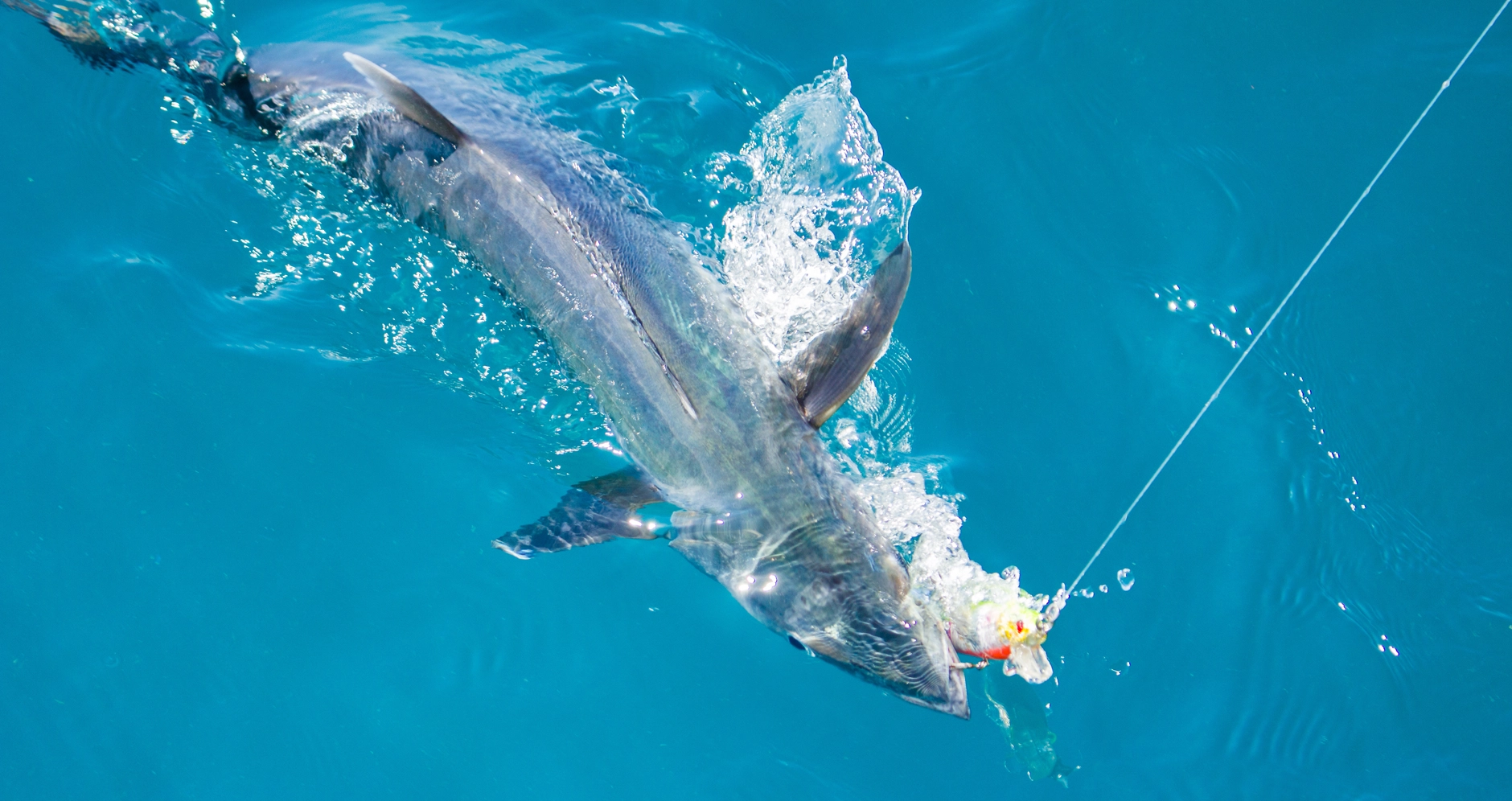
Hooking a King is just the beginning. The real test starts the second that rod loads up and your drag starts screaming. Kingfish are built for speed, and their first run is often explosive — fast, powerful, and completely committed. Staying calm and letting the fish do what it’s going to do is the difference between a successful fight and a lost opportunity.
When the strike happens:
- Let the fish make its first run: That initial burst is almost always the longest and fastest run of the fight. Trying to stop it immediately can pull hooks or snap leaders. Trust your drag and let the fish burn off that first surge of energy.
- Avoid cranking against a screaming drag: When your reel is paying out line, resist the urge to reel. Reeling against a running fish creates slack and reduces hook penetration. Instead, maintain rod position and prepare to gain line once the fish slows.
- Maintain steady pressure: Consistent tension is everything. Kings have hard mouths and sharp teeth — any slack in the line gives them the opportunity to shake free. Keep your rod tip slightly bent and stay engaged throughout the fight.
Kingfish are known for:
- Long, high-speed runs that test your drag system
- Violent head shakes designed to throw hooks
- Surface thrashing and last-second surges near the boat
That final moment at boatside is often where anglers lose fish. Many Kings make a sudden dive or burst when they see the boat. Be ready. Keep steady pressure and avoid high-sticking the rod, which can lead to break-offs.
After the first run, you’ll usually gain line steadily as the fish tires. Work methodically — lift the rod, reel down, repeat. Don’t rush it. Even smaller Kings can surprise you with a second wind.
When it comes time to land the fish, a proper gaff shot is recommended, especially for larger Kings. Aim for a solid shot behind the head or in the shoulder area to secure control quickly. Avoid swinging smaller fish into the boat by the line — their teeth can easily cut you off at the last second.
Fighting a Kingfish is controlled chaos. Stay patient, stay steady, and let your gear do its job. When that silver flash finally hits the deck, you’ll understand why so many Gulf Coast anglers are hooked on chasing them year after year.
Safety Offshore
Kingfish often require running several miles offshore, and while the reward can be worth it, offshore fishing demands preparation and respect for the conditions. The Gulf can look calm at the dock and completely different 10 miles out. Safety isn’t just a checklist — it’s a mindset. The further you run, the more responsibility you carry for yourself, your crew, and your vessel.
Before heading out:
Check Marine Forecasts
Don’t rely solely on a standard weather app. Review marine-specific forecasts for wind speed, wave height, and storm potential. Pay close attention to small craft advisories and afternoon thunderstorm patterns, especially during Florida’s summer months.
Monitor Wind and Wave Conditions
Even a modest shift in wind direction can build uncomfortable or unsafe seas. A 10–15 knot wind opposing outgoing tide can create steep chop quickly. Always plan your run with both the outgoing and return trip in mind.
Ensure Safety Equipment is Onboard
Required safety gear should be checked before every trip, not assumed to be there. This includes properly fitting life jackets for every passenger, a working VHF radio, visual distress signals, fire extinguisher, throwable flotation device, first aid kit, and updated registration. Offshore runs also warrant backup communication like a handheld VHF or EPIRB if venturing farther out.
Alert People of Your Float Plan
Let someone on land know where you’re going, what time you expect to return, and how many people are onboard. If something unexpected happens, that information can dramatically speed up assistance.
Weather can shift quickly on the Gulf. What starts calm can build rapidly, especially in summer when pop-up storms roll across the water in the afternoon. Lightning offshore is no joke. If dark clouds begin stacking up, it’s time to make a decision early — not after conditions deteriorate.
Fuel management is another critical safety factor. A good rule is the one-third rule: one-third of your fuel to get out, one-third to return, and one-third in reserve. Running offshore to chase Kings means covering water, and conditions can increase fuel burn significantly.
Offshore fishing should be exciting — not stressful. Preparation gives you the confidence to focus on the bite instead of worrying about what could go wrong.

Eating Kingfish
King Mackerel is absolutely edible, and when handled properly, it can be a fantastic table fish. That said, opinions vary depending on the size of the fish and how it’s prepared. Like many pelagic species, quality depends heavily on proper bleeding, icing, and trimming. Treat it right from the moment it hits the deck, and you’ll be rewarded with firm, flavorful fillets.
Best Eating Size
Smaller “schoolie” Kings — typically in the 5–15 pound range — are widely considered the best eating. Their meat tends to be firmer, milder, and less oily than that of larger fish. These fish are perfect for grilling, blackening, or smoking without overpowering flavor.
Larger “smoker” Kings can still be eaten, but the meat becomes oilier and stronger in taste as the fish ages. Many anglers prefer to release bigger breeding fish anyway, both for conservation and because smaller legal fish generally offer better texture at the table. If you’re keeping one for dinner, aim for fish within the legal slot that haven’t been stressed excessively during the fight.
Cleaning Tips
Proper care after the catch makes a massive difference in taste.
- Bleed the fish immediately after landing by cutting the gill arches or making a quick cut at the throat latch. This removes excess blood and improves meat quality, while still keeping the fish intact, as required by FWC Regulations.
- Remove the dark red meat along the lateral line. That darker strip contains more oils and can produce a stronger flavor if left intact.
- Ice the fish quickly and keep it cold. Heat is the enemy of fresh fish. Lay it flat in a cooler with plenty of ice, allowing water to drain rather than soaking the fillets.
When filleting, use a sharp knife and take your time. Kingfish have relatively large fillets with a noticeable bloodline — trimming cleanly makes all the difference.
Cooking Methods
Kingfish is firm and meaty, which makes it versatile in the kitchen. Because of its oil content, it holds up especially well to high-heat cooking methods.
Kingfish works beautifully:
- Grilled over charcoal or gas with a light oil coating
- Smoked, which enhances its natural richness
- Blackened, a Florida favorite with Cajun seasoning
- Fried, especially in sandwich form
Smoked Kingfish dip is a Gulf Coast classic. Blend flaked smoked Kingfish with cream cheese, mayo, lemon juice, and seasoning, and you’ve got a crowd-pleaser at any dockside gathering.
For a lighter option, try grilled Kingfish topped with mango salsa or a citrus herb butter. The oil content pairs well with bright, acidic flavors that balance richness.
Handled properly and cooked thoughtfully, Kingfish can be just as rewarding at the dinner table as it is on the end of your line.
Why Kingfish Are So Popular in Florida
Kingfish have earned their place as one of Florida’s most sought-after offshore species — and it’s not just because they’re fast. They check every box that anglers look for: accessibility, excitement, seasonality, and table value. Whether you’re a weekend warrior or a tournament competitor, there’s something about a screaming Kingfish run that keeps people coming back year after year.
Kingfish are:
- Abundant seasonally, especially during spring and fall migrations
- Hard-fighting, delivering explosive runs and aggressive strikes
- Accessible to recreational anglers, even those new to offshore fishing
- Targeted in major tournaments, where large “smokers” draw serious competition
They’re also one of the best stepping stones into offshore fishing. You don’t always need to run 40 or 50 miles out to get in on the action. Many Kings are caught within reasonable distance from shore when bait is present, especially during migration windows. That makes them ideal for anglers looking to expand from inshore waters into nearshore or light offshore fishing without committing to extreme runs.
For Gulf Coast anglers out of Port Richey, Clearwater, Tarpon Springs, and the greater Tampa Bay area, Kingfish represent one of the most exciting pelagic opportunities available locally. They offer the thrill of offshore fishing without requiring long-distance canyon runs. When the bite is on, it’s fast-paced, visual, and unforgettable.
Gear Up for the Run
Chasing Kingfish means covering water, locating bait, and sometimes making longer runs to productive structure. That requires a boat you trust — not just in calm conditions, but when the wind picks up or seas build unexpectedly. Range, fuel efficiency, and stability all matter when you’re working reefs or chasing migrating schools.
Offshore-ready center consoles, well-equipped bay boats, and vessels with proper electronics and fuel capacity make a noticeable difference in both success and safety. Having reliable GPS, sonar capable of marking bait pods, VHF communication, and proper rod storage keeps your focus on fishing instead of troubleshooting.
At Unreel Marine in POrt Richey, we work with anglers every day who are preparing for offshore season. Whether that means upgrading electronics, adding rod holders and outriggers, increasing fuel capacity, or stepping into a boat with more power and range, having the right setup matters when the bite turns on. When Kingfish are running, you want to spend your time chasing them — not wishing you had a better platform to do it from.
Final Thoughts
Kingfish aren’t just another offshore target — they’re a rite of passage for Gulf Coast anglers. From the first screaming run to the flash of silver at boatside, chasing King Mackerel delivers everything that makes saltwater fishing addictive. They demand awareness, preparation, and adaptability, but they reward you with pure adrenaline when everything comes together.
Whether you’re slow trolling live bait over a reef off Port Richey, working nearshore structure during the fall run, or covering water in search of migrating schools, success with Kingfish comes down to understanding their seasonal movement, presenting bait naturally, and staying ready when the strike happens. Follow the temperature. Follow the bait. Trust your gear. The rest falls into place.
For anglers along Florida’s Central Gulf Coast, Kingfish offer one of the most exciting and accessible offshore experiences available. You don’t need to be a tournament pro or run to the horizon to hook into a quality fish. With the right preparation, the right conditions, and a little patience, that next screaming drag could be just a few miles offshore.
And when that silver missile finally hits the deck, you’ll understand exactly why Kingfish season is circled on so many Gulf Coast calendars every year.

