Savannah 220IS: The Hybrid Bay Boat Built for Coastal Versatility
There are boats built for the flats. There are boats built for offshore. And then there are boats like the Savannah 220IS — built for both.
For Gulf Coast anglers running out of Hudson, Tarpon Springs, Clearwater, and the greater Tampa Bay area, versatility matters. One morning you’re stalking redfish on shallow grass flats. By afternoon, you’re running to nearshore reefs chasing snapper or kingfish. You need a platform that transitions seamlessly.
The Savannah 220IS isn’t trying to be everything. It’s built to do two things exceptionally well: fish hard and ride comfortably.
Let’s break down exactly what makes this 22-foot hybrid such a serious contender in the inshore-to-offshore category.
Where the 220IS Fits in the Lineup
The Savannah 220IS falls squarely into the hybrid bay boat category — but it leans toward offshore capability more than many boats in its class.
At 22 feet in length, the 220IS hits the sweet spot:
- Large enough for nearshore runs
- Shallow enough for inshore fishing
- Nimble enough for tight maneuvering
- Stable enough for family cruising
For Gulf Coast boaters, that balance is critical. You don’t always want to commit to a 26–30 foot offshore center console, but you also don’t want to feel limited to the flats.
The 220IS bridges that gap.
Why Hybrid Boats Make Sense on the Gulf
The Gulf Coast rewards adaptability. Conditions change. Species migrate. Weather windows open and close. One weekend you’re poling through shallow grass flats chasing redfish in 18 inches of water. The next, you’re running 12 miles offshore to target snapper, cobia, or kingfish.
Owning a single-purpose boat can start to feel restrictive in a region like this.
A dedicated flats boat can feel limiting offshore. Its shallow draft and wide beam are perfect for skinny water, but when the afternoon wind stacks up Gulf chop, the ride can quickly become uncomfortable. Limited fuel capacity and lower freeboard also reduce confidence when venturing farther from shore.
On the other end of the spectrum, a large offshore center console can feel oversized and inefficient on the flats. Draft becomes a concern. Maneuvering tight mangrove shorelines gets harder. Fuel burn increases. Storage and maintenance costs climb. For many anglers, that level of platform simply isn’t necessary for the majority of Gulf Coast fishing.
Hybrid boats like the 220IS offer a practical middle ground — especially in regions like Hudson, Tarpon Springs, Clearwater, and Tampa Bay where anglers regularly cross between inshore and nearshore waters within the same trip.
The hybrid advantage lies in balance with:
- Enough draft to access productive inshore water
- Enough hull design to handle moderate offshore conditions
- Enough fuel capacity for reef hopping
- Enough deck space for serious fishing
Instead of forcing you to choose between two extremes, a hybrid platform adapts to how Gulf Coast anglers actually fish. It allows you to follow seasonal migrations and weather windows without constantly feeling like you brought the wrong boat for the day.
For many Florida boaters, that flexibility isn’t just convenient — it’s the difference between using your boat often or leaving it sitting.
A Fishing Machine: Built for Serious Anglers
This isn’t just a recreational boat with rod holders added as an afterthought. The 220IS is purpose-built to fish.
Elevated Casting Platforms
Both bow and stern feature raised casting decks, allowing anglers to:
- Sight-fish redfish and snook
- Throw topwater plugs at first light
- Work live bait cleanly
The bow deck is spacious enough for two anglers without feeling cramped.
Livewell System
A properly designed livewell keeps bait healthy during long fishing days. Whether you’re slow trolling for kingfish or freelining shrimp for redfish, live bait performance matters.
The 220IS livewell placement and plumbing are designed to support that.
Rod Storage & Tackle Organization
Integrated rod storage and strategically placed holders make transitions between techniques seamless. You’re not digging through compartments when the bite turns on.
Everything has its place.
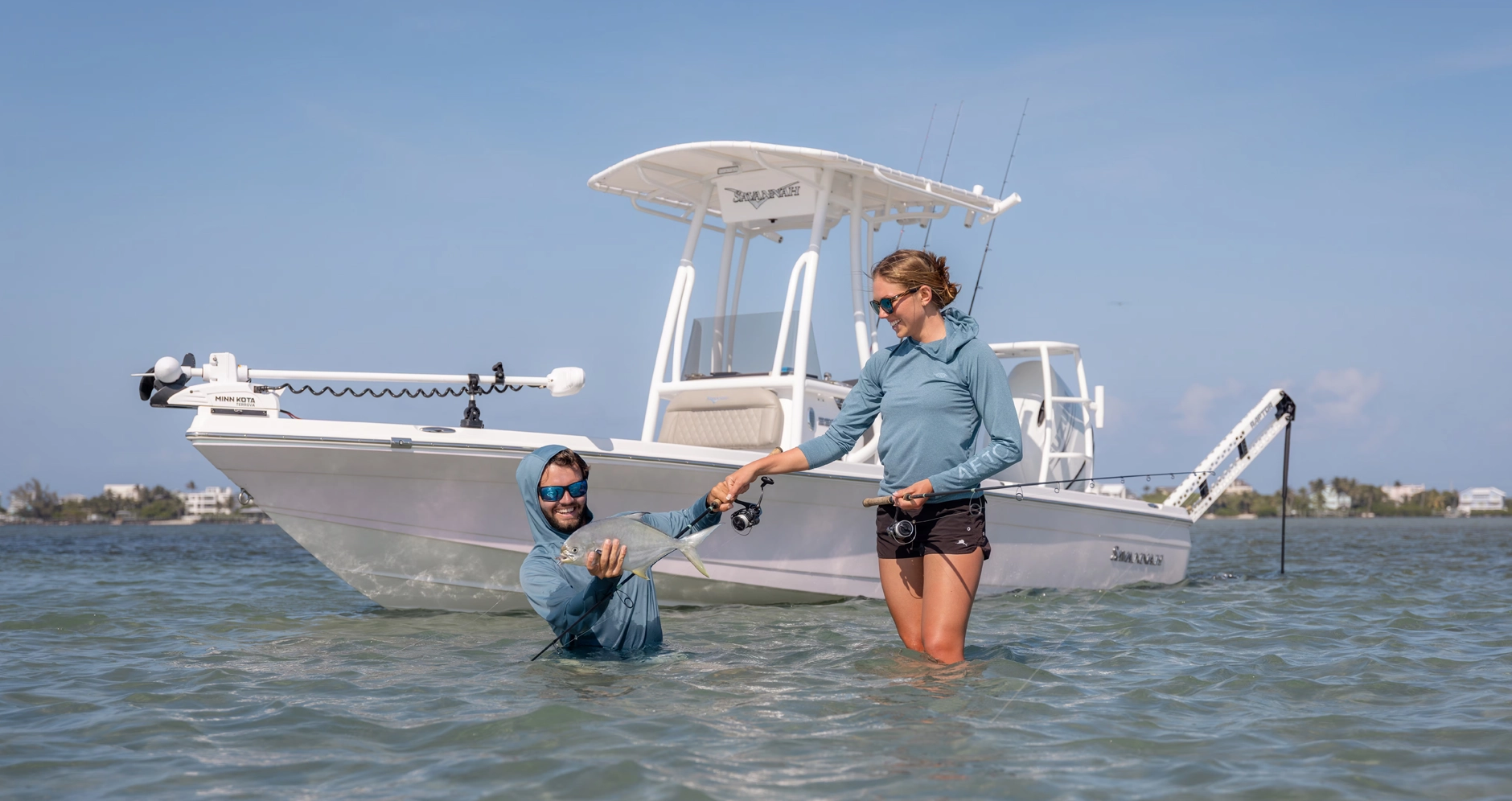
Hull Design & Ride Quality
Hybrid boats live or die by hull design. The 220IS features a deep-V entry forward that gradually transitions to a more moderate 14.5° deadrise aft. That design accomplishes two key goals:
- Softens chop when running offshore
- Maintains stability at rest
Cutting Through Gulf Chop
Afternoon winds are part of life on Florida’s Gulf Coast. A flat-bottom bay boat can pound uncomfortably when seas build. The 220IS’s sharper entry helps split wind chop instead of slapping against it.
When you’re running 10–20 miles offshore to a reef or artificial structure, this hull design makes a difference.
Stability on the Flats
At rest, the hull flattens out enough to provide excellent side-to-side stability. That matters when:
- Two anglers are working one side of the boat
- You’re casting toward mangroves
- You’re sight-fishing in skinny water
It’s the kind of balance that makes this boat feel planted without feeling bulky.
Power & Performance
The Savannah 220IS is commonly paired with a Suzuki outboard, offering reliable and efficient performance tailored for Gulf Coast conditions.
Efficient Cruise
With the right power package, the 220IS offering max HP of 250, delivers an efficient cruise speed that allows you to comfortably run to nearshore reefs or hop between fishing spots without burning excessive fuel.
Fuel economy matters when you’re chasing kingfish or snapper several miles offshore.
Top-End Capability
When conditions allow, the 220IS has enough top-end speed to get you home quickly if weather shifts. That flexibility adds confidence to your runs.
Hole Shot & Planing
The boat jumps on plane quickly, even when loaded with gear, fuel, and passengers. That responsiveness is important when navigating busy channels around Hudson or Tarpon Springs.
Shallow Water Access
Despite its offshore capability, the draft remains shallow enough to work grass flats and mangrove shorelines effectively.
That’s the hybrid advantage.
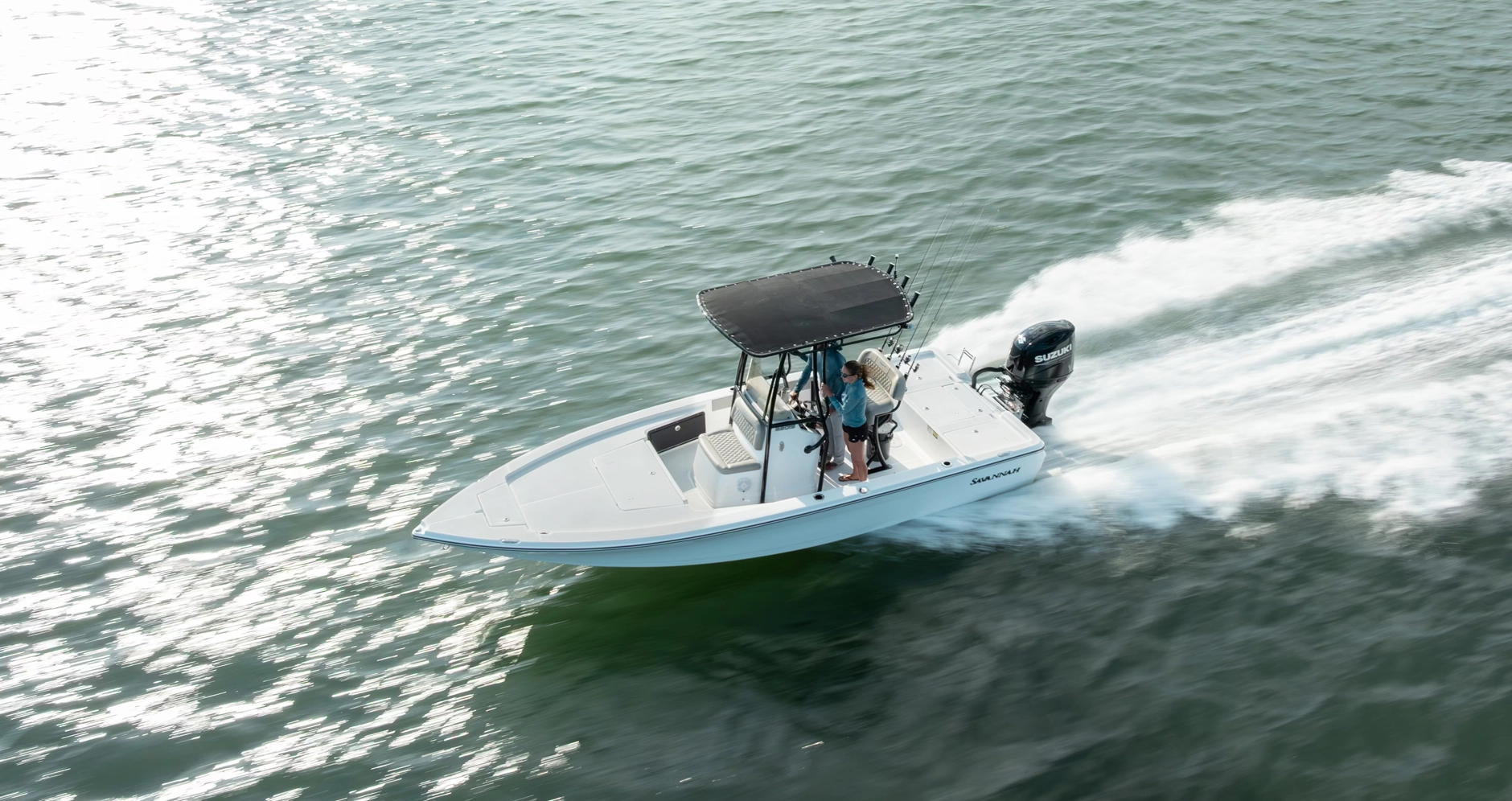
Comfort & Layout
Savannah understands something important: a fishing boat still needs to function as a family boat. Most Gulf Coast boat owners aren’t running commercial charters — they’re balancing serious fishing with sandbar afternoons, sunset cruises, and bringing friends along for the ride.
The 220IS is laid out to support that dual purpose without sacrificing fishability.
Bow Seating
Forward seating cushions provide comfort when cruising but can be removed or converted when it’s time to fish. That flexibility allows the bow to serve two very different purposes throughout the same day.
When cruising with family, the bow becomes a comfortable lounging area with secure backrests and clean lines. When fishing, cushions can be removed to open up a raised casting platform large enough for two anglers to work comfortably.
The elevated platform also improves sight lines for spotting redfish in shallow water or scanning for bait activity along mangrove edges. You’re not sacrificing fishing performance for comfort — you’re gaining both.
Helm Design
The console layout offers clean sight lines and space for modern electronics. Whether you’re running GPS tracks offshore or scanning for bait schools on your sonar, the helm is functional and intuitive.
The steering position provides clear visibility over the bow while maintaining easy access to throttle, trim, and electronics. Space for larger multifunction displays means you’re not cramped into a small screen when navigating or marking structure.
Thoughtful placement of switches, gauges, and controls keeps the helm uncluttered. That matters when conditions get busy — running through boat traffic near Clearwater Pass or navigating shifting channels around Hudson requires focus and clean information access.
Comfort at the helm also plays a role. Proper seating support reduces fatigue on longer runs offshore or during extended trolling sessions.
Storage Throughout
Dry storage compartments are positioned intelligently to keep gear organized without sacrificing deck space. A cluttered deck slows down fishing and increases safety risks. The 220IS avoids that problem.
Lockable storage areas protect electronics, tackle, and personal gear from both weather and spray. Dedicated compartments help separate fishing equipment from cruising accessories, keeping transitions smooth.
Rod storage keeps rods secure during runs without crowding walkways. That becomes especially important when multiple anglers are onboard preparing for a nearshore trip.
In a hybrid boat, deck space is valuable real estate. The 220IS maximizes usable space without feeling cramped — whether you’re casting artificials on the flats or managing trolling lines offshore.
Offshore Capability: How Far Can It Go?
Let’s be realistic. The 220IS is not a canyon-running offshore boat — and it’s not trying to be. It’s not built for 60-mile bluewater runs or multi-day offshore excursions.
But for Gulf Coast anglers, most productive fishing happens well within 10–25 miles of shore. That’s where nearshore reefs, artificial structures, ledges, and bait-rich hard bottom areas hold steady action — especially out of Hudson, Tarpon Springs, and Clearwater.
The 220IS excels at:
- Nearshore reefs where mangrove snapper, grunts, and Spanish mackerel stack up
- Artificial structures that hold bait and attract seasonal predators
- Wrecks in moderate depths that can be reached comfortably during good weather windows
- Kingfish trolling runs along reef edges and depth changes
- Snapper season trips when conditions allow
Its deeper forward entry and hybrid hull design give it the ability to handle moderate Gulf chop better than a traditional flat-bottom bay boat. You’re not pounding your way through every wave — the bow cuts cleanly and rides more confidently in the 1–3 foot conditions typical of many summer mornings.
The 72-gallon fuel capacity also plays a major role in offshore confidence. With efficient cruising speeds and responsible throttle management, that range supports legitimate nearshore exploration without anxiety about fuel burn.
During the right weather window, the 220IS gives you the confidence to expand beyond the flats — without stepping into a much larger class that brings higher fuel costs, storage demands, and maintenance overhead. It’s capable without being excessive.
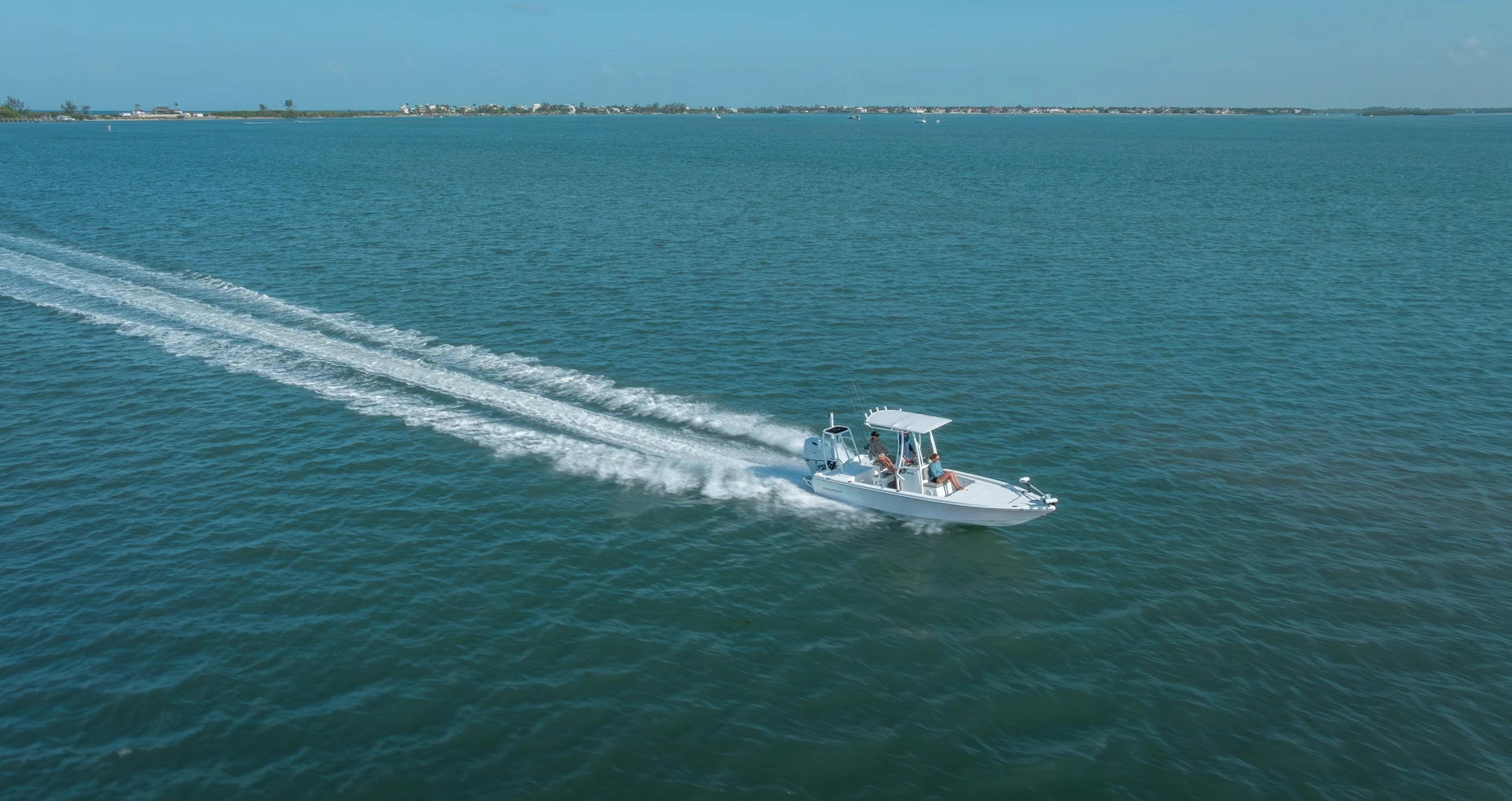
Electronics & Customization Potential
The 220IS serves as a strong foundation for personalization. Out of the box, it’s ready to fish. But for Gulf Coast anglers who target multiple species throughout the year, smart upgrades elevate the platform significantly.
Common upgrades include:
- Dual GPS/fishfinder displays for split-screen sonar and navigation clarity
- VHF radio systems for offshore communication and safety
- Trolling motor to motor up to your target with minimal noise
- Power poles for silent shallow-water anchoring
- Additional rod holders for trolling spreads or vertical jigging
- Trim tabs to fine-tune ride and performance in changing sea conditions
For anglers running nearshore reefs, modern sonar capability makes a difference. Being able to mark bait schools, identify bottom transitions, and track structure edges increases efficiency dramatically.
Trolling motor integration transforms the 220IS into a serious inshore tool. Whether holding position on grass flats for trout or locking in over a snapper spot in lighter current, precision control expands your fishing options.
The layout of the 220IS allows for clean rigging and organized installation of these systems. Wires, pumps, and electronics can be added without turning the console into chaos.
Customization isn’t just about gadgets — it’s about building a platform that matches how you fish. The 220IS supports that flexibility without feeling overcomplicated.
Safety & Practical Considerations
Safety isn’t just about equipment — it’s about design. The 220IS incorporates structural and layout elements that add confidence when conditions shift.
The deeper hull and higher freeboard compared to traditional bay boats provide added security when running offshore or working moderate chop. You’re not standing inches above the waterline.
Key safety advantages include:
- Secure cockpit depth that keeps crew positioned safely inside the boat
- Stable ride in moderate chop, reducing fatigue on longer runs
- Ample fuel range of 72 gallons for nearshore trips without pushing limits
That cockpit depth matters when multiple anglers are moving around the deck or when seas build unexpectedly. It adds a psychological layer of confidence — especially when bringing family or less experienced passengers offshore.
The 72-gallon fuel capacity supports proper offshore planning. Combined with the one-third fuel rule, it provides realistic range for reef hopping or seasonal kingfish runs without operating on a razor-thin margin.
Pair that with responsible weather monitoring, functioning safety gear, and thoughtful route planning, and the 220IS becomes more than a hybrid boat — it becomes a dependable Gulf Coast platform.
Where the 220IS Shines in Florida
The Savannah 220IS feels tailor-made for Central and North Gulf Coast waters, where anglers frequently transition between inshore and nearshore fishing throughout the same day.
Hudson & Tarpon Springs
Out of Hudson, you can run grass flats at sunrise targeting redfish and trout. As the morning progresses and the tide shifts, you can slide offshore toward nearshore reefs or hard-bottom patches. The 220IS handles both without forcing you to compromise.
Tarpon Springs offers similar versatility, with quick access to productive Gulf waters and abundant inshore structure. The boat’s maneuverability makes navigating channels and shallow approaches comfortable.
Tampa Bay
In Tampa Bay, versatility is everything. You may spend one tide cycle working grass flats for trout and redfish, then push toward deeper edges and shipping channels for snapper and cobia.
The 220IS provides the deck space for serious fishing while still maintaining comfort for family cruising through calmer bay waters.
Clearwater & Nearshore Gulf
Clearwater’s proximity to artificial reefs and seasonal kingfish runs makes the 220IS a practical nearshore platform. You can target Spanish mackerel, kingfish, cobia, and snapper without committing to a 30-foot offshore center console.
The ability to fish shallow in the morning and troll deeper water by midday is where this boat truly separates itself.
Who Is the 220IS For?
The Savannah 220IS is ideal for anglers who refuse to be boxed into one category.
It’s built for:
- Anglers wanting both inshore and nearshore capability
- Gulf Coast boaters upgrading from smaller bay boats
- Families who fish seriously but also cruise comfortably
- Weekend warriors chasing seasonal migrations
If your fishing calendar includes redfish in spring, kingfish in summer, snapper season runs, and fall nearshore action — this boat aligns perfectly with that rhythm.
It’s especially well-suited for anglers who want offshore capability without the cost, storage demands, and fuel burn of a larger offshore-only platform.
The 220IS rewards anglers who value balance: performance without excess, capability without complication.
Ownership & Maintenance
Savannah boats are known for thoughtful construction and attention to detail. That reputation translates into ownership confidence — especially in saltwater environments like Florida’s Gulf Coast.
For owners, that translates into:
- Simplified maintenance access to pumps, batteries, and rigging
- Durable materials suited for saltwater exposure
- Efficient rigging layouts that reduce clutter and troubleshooting
Saltwater is unforgiving. Corrosion resistance, clean wiring, and accessible systems make long-term ownership easier and less stressful.
The fiberglass finish, deck hardware, and structural integrity are built to withstand years of sun exposure, salt spray, and repeated use. With routine maintenance — washing, flushing, and seasonal servicing — the 220IS is built to handle years of salty Gulf Coast fishing conditions.
Owning a hybrid boat like the 220IS also tends to reduce the “boat swapping” cycle. Because it covers multiple styles of fishing, you’re less likely to feel limited as your interests evolve.
Final Thoughts: The 220IS Advantage
The Savannah 220IS isn’t about extremes. It’s about balance.
It gives you the confidence to run offshore when conditions allow, the shallow-water access to fish the flats effectively, and the comfort to bring family along when the rods aren’t bent.
For Gulf Coast anglers who don’t want to be boxed into one style of fishing, the 220IS delivers versatility without compromise.
And in a region where versatility equals opportunity, that matters.

