Outboard Service: A Florida Boater’s Guide
In Florida, the boating season never really ends.
One weekend you might be cruising the Gulf, the next you’re running a freshwater lake, and a few days later you could find yourself exploring a brackish river or estuary. For boaters who live near the coast, all three environments may be within an easy drive—and that variety is one of the best things about boating in Florida.
It also means your outboard can experience some very different operating conditions.
Saltwater can accelerate corrosion. Brackish and silty water can introduce their own challenges. Freshwater may be less corrosive, but it doesn’t eliminate the need for routine maintenance. Add Florida’s heat, humidity, long boating season, and periods when a boat may sit unused, and regular outboard service becomes an important part of owning a boat here.
So, how often should you service your outboard?
The short answer is: according to your manufacturer’s maintenance schedule. You'll want to base it on engine hours and elapsed time, not simply when something goes wrong. Many modern outboards use annual or engine-hour service intervals, but the exact requirements vary by manufacturer and model. Yamaha, for example, lists annual or 100-hour service intervals for many of its outboards, while Mercury likewise emphasizes following the specific inspection and maintenance schedule in the engine’s manual.
Boat owners need to remember this: scheduled service is only one part of responsible outboard care.
For Florida boaters, how often you flush the engine, where you operate it, how you store it, and what warning signs you notice between services can all affect how well your motor performs.
Understanding Your Outboard’s Service Schedule
There is no single maintenance schedule that applies to every outboard.
Your engine’s manufacturer and specific model determine when important maintenance items should be inspected, replaced, or serviced. Engine hours are an important part of that schedule, but time matters too. An outboard that only sees 40 hours of use in a year still shouldn't necessarily go two or three years without service.
That’s why the first place to start is always your owner’s manual.
Manufacturers build their maintenance schedules around the components and operating characteristics of their engines. Following that schedule helps ensure routine items aren't overlooked simply because the engine hasn't accumulated a certain number of hours.
The 100-Hour Rule Isn't the Whole Story
The 100-hour interval is familiar to many boat owners because it is a common service milestone across marine outboards. Yamaha currently recommends annual or 100-hour service for many models, for example. Yamaha also identifies an initial service after the first 20 hours on new outboards, followed by subsequent scheduled maintenance.
While “100 hours” should be treated as a guideline within the manufacturer's schedule, it is not a universal rule for every motor.
Some maintenance items occur more frequently. Others may have longer replacement intervals. A new engine may have a different initial service requirement than an engine that has already accumulated several hundred hours.
Your owner's manual is therefore the authority for your specific outboard.
If you're unsure when your next service is due, a qualified marine service department can help you establish the correct schedule based on your engine, hours, usage, and maintenance history.
What Happens During Routine Outboard Service?
Routine service goes well beyond changing the oil.
Depending on your engine and its service interval, a technician may inspect or replace the engine oil and filter, gearcase lubricant, fuel filters, spark plugs, water-pump components, anodes, belts, hoses, and fittings. Yamaha’s maintenance schedule includes many of these same items, along with corrosion protection, and the exact list varies by model and interval. A qualified technician can confirm what your Yamaha needs at each service and catch small problems before they turn into bigger ones.
A service appointment is also an opportunity to identify developing problems before they become failures on the water.
A technician may find early corrosion, a worn component, a damaged seal, contaminated gearcase lubricant, or another issue that isn't obvious during a quick pre-launch inspection.
That's one of the biggest advantages of scheduled maintenance. You're not simply servicing the engine because the calendar says it's time.
You're giving someone an opportunity to find the problems before the water does.
Florida Outboard Maintenance: Your Water Matters
Florida's boating environment makes ongoing outboard maintenance especially important because not all water treats your outboard the same way.
The difference between saltwater, brackish water, and freshwater isn't just a matter of what kind of fishing or boating you enjoy. The environment your engine operates in can influence how frequently you should perform certain maintenance tasks between scheduled services.
Saltwater: Flush After Every Use
Saltwater is one of the toughest environments for an outboard.
Salt residue can contribute to corrosion on exposed components, while saltwater remaining inside the cooling system can leave deposits and contribute to corrosion over time. That's why flushing with fresh water after saltwater use is one of the simplest and most important maintenance habits a coastal boater can develop.
Mercury recommends flushing and rinsing an outboard after saltwater operation to help clear corrosive saltwater and remove salt residue. Suzuki likewise recommends flushing with fresh water after each saltwater trip.
Yamaha's maintenance guidance also specifically identifies flushing after use—especially in salty or brackish water—as part of ongoing outboard care.
That makes the post-trip routine simple:
Come home. Flush the motor. Rinse away the salt.
It takes far less time than dealing with preventable corrosion later.
Brackish Water: Don't Treat It Like Freshwater
Brackish water can be easy to overlook because it sits somewhere between freshwater and saltwater.
In Florida, however, brackish environments are common around estuaries, rivers, bays, and tidal systems. Salinity can change based on rainfall, river flow, tides, wind, and other conditions, meaning the water you're running in isn't necessarily the same from one trip to the next.
For maintenance purposes, that means brackish water deserves the same respect as saltwater.
Flush your outboard with clean, fresh water after use rather than assuming that because you weren't technically offshore, the engine doesn't need attention.
Yamaha specifically identifies salt and brackish water in its flushing guidance, while Mercury recommends flushing after use in brackish water as well as polluted or very silty freshwater.
If your boating routine regularly moves between rivers, bays, backwaters, and the coast, make the freshwater flush part of every trip's routine regardless of which body of water you visited.
Freshwater: Lower Risk Doesn't Mean Less Maintenance
Freshwater is generally easier on an outboard from a corrosion standpoint than saltwater, but it doesn't make the motor maintenance-free.
Freshwater lakes and rivers can contain sand, silt, vegetation, and other debris that can enter the cooling-water system or collect around the lower unit and intake areas. Yamaha recommends inspecting the water-pump and impeller system regularly, regardless of whether the engine operates in salt, brackish, turbid, or freshwater.
Freshwater boaters still need to stay on top of oil, gearcase lubricant, filters, spark plugs, batteries, fuel, propeller condition, and all other manufacturer-specified maintenance as well.
In other words, freshwater may reduce one category of environmental stress, but it doesn't eliminate maintenance.
Saltwater vs. Freshwater: What Changes?
If you regularly switch between Florida's different waterways, you don't necessarily need a completely different maintenance program for each one.
Instead, think about how often the environment increases the need for inspection and post-use care.
The important distinction is that scheduled service and between-trip maintenance are two different things.
You may only need a major scheduled service once a year or at a specified engine-hour interval, but you may need to flush the engine after every trip.
Both matter.
Yamaha Outboard Service: What Owners Should Know
Yamaha owners have a well-defined maintenance framework, but the same principle applies here as it does with every major outboard brand: follow the schedule for your specific engine.
Yamaha's current maintenance guidance calls for regular service based on both engine hours and elapsed time, with annual or 100-hour service common across its outboard lineup. Yamaha also identifies an initial 20-hour service for new outboards before moving into subsequent scheduled intervals.
That scheduled service can include items such as engine and lower-unit oil, fuel filters, spark plugs, water-pump components, lubrication points, corrosion protection, and other inspections depending on the model and interval.
Yamaha Maintenance Between Services
The work doesn't stop when the annual service is complete.
Yamaha emphasizes regular flushing, fuel care, corrosion prevention, and inspection between scheduled service appointments. Its current maintenance guidance also recommends keeping an eye on the water-pump and impeller system and checking components according to the engine's specific maintenance schedule.
For Florida Yamaha owners, that means building a few simple habits into every boating trip:
- Flush after saltwater and brackish-water use.
- Inspect for visible corrosion.
- Keep the cooling-water intake clear.
- Monitor fuel condition and the fuel/water separator.
- Pay attention to warning indicators and changes in engine performance.
- Keep up with the manufacturer's scheduled service intervals.
If you're running a Yamaha regularly in saltwater, don't wait for an annual appointment to think about corrosion.
Yamaha's own midseason guidance recommends periodically inspecting and protecting the powerhead from saltwater exposure, with more frequent attention for boats that operate in rough conditions where salt spray can reach the engine compartment.
That's the kind of maintenance that helps turn an annual service appointment into one part of a year-round maintenance strategy.
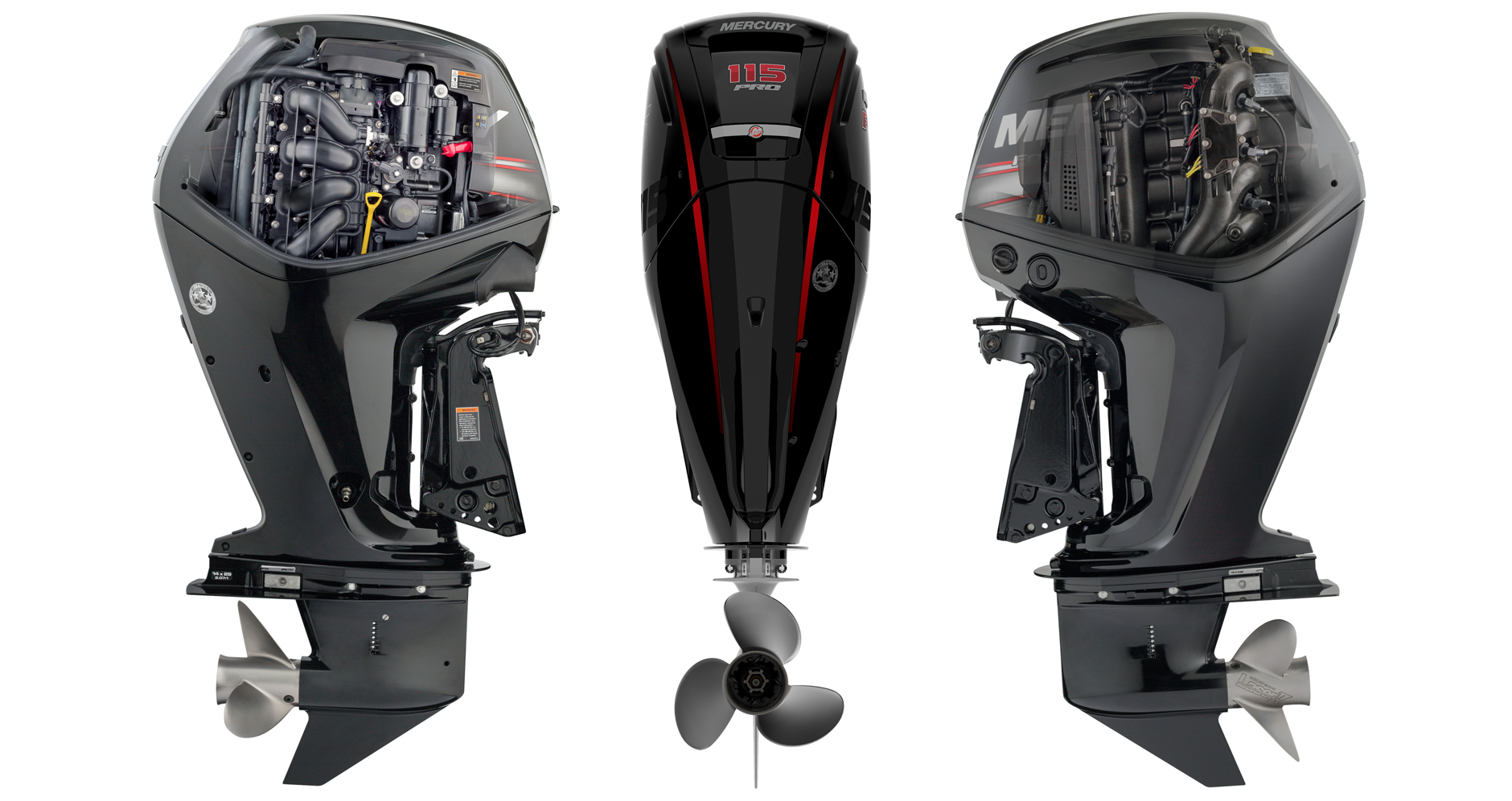
Mercury Outboard Service: What Owners Should Know
Mercury outboards have their own maintenance schedules and service requirements, so owners should always start with the manual for their specific engine. Mercury's maintenance guidance emphasizes scheduled inspections and service based on engine hours and time, with requirements varying by model and engine family.
For Florida boaters, however, some maintenance habits are universal.
Mercury recommends flushing the outboard after operating in saltwater, brackish water, polluted water, or very silty freshwater. That makes post-trip flushing particularly important for Florida boaters who move between coastal waters, estuaries, rivers, and lakes.
Routine Mercury service can include engine oil and filter changes, gearcase lubricant, fuel filters, spark plugs, water-pump components, lubrication points, anodes, and inspections of critical systems depending on the engine and service interval.
The important takeaway is simple: don't use a generic hour count as a substitute for your Mercury's actual maintenance schedule.
If your engine spends a lot of time in saltwater, regular flushing and corrosion inspection between scheduled services become just as important as the service appointment itself.
Suzuki Outboard Service: What Owners Should Know
Suzuki outboards also require maintenance based on both engine hours and elapsed time, with the exact schedule depending on the engine model.
For Suzuki owners, one of the most important habits after saltwater operation is flushing the cooling system with fresh water. Suzuki specifically recommends flushing with fresh water after each saltwater use, helping remove salt and other contaminants from the cooling passages.
That same discipline makes sense for Florida's brackish waterways, particularly when you're moving between tidal rivers, bays, and coastal waters.
Scheduled Suzuki maintenance can include engine oil, oil filters, gear oil, spark plugs, fuel-system components, water-pump components, anodes, and other inspections or replacements specified for the engine.
As with Yamaha and Mercury, the manufacturer's maintenance schedule is the starting point. Your actual service needs can also be influenced by how often you run the engine, the environment in which you operate, and how the boat is stored.
The advantage of staying ahead of those requirements is the same regardless of brand: you're addressing wear and contamination before they become a problem on the water.
Offseason Outboard Storage
Florida may not have a traditional winter boating season, but that doesn't mean every boat runs year-round.
A boat might sit for several weeks during the hottest part of summer, during hurricane season, while the family is traveling, or simply because life gets busy. Longer-term storage deserves its own maintenance routine.
The exact storage procedure depends on the engine manufacturer and how long the boat will be sitting, but several fundamentals apply.
Flush and Clean the Outboard
Start with a thorough freshwater flush, particularly after saltwater or brackish-water use.
Give the exterior of the engine a good rinse as well, paying attention to areas where salt or grime can accumulate. Let the engine drain completely according to the manufacturer's recommendations.
The goal is to avoid putting the motor into storage with salt residue or contaminants sitting on and inside critical components.
Check Fluids and Lubricants
Before extended storage, check the engine oil and lower-unit lubricant according to the manufacturer's procedures.
If service is due, storage can be a good time to take care of it rather than letting old oil or contaminated lubricant sit in the engine throughout the storage period.
Inspect the lower unit for signs of water intrusion or unusual lubricant color, and address anything suspicious before putting the boat away.
Protect the Fuel System
Fuel deserves special attention when an outboard is going to sit.
Follow your engine manufacturer's recommendations for fuel stabilization and storage. If the boat uses a fuel-water separator, inspect it and replace it when appropriate.
The objective is to prevent fuel-related problems from becoming the first thing you discover when you're ready to launch again.
Inspect Corrosion Protection
Look over the engine for corrosion, paying particular attention to anodes and exposed hardware.
Florida's humidity means corrosion doesn't necessarily stop just because the boat isn't being used. A clean, dry, protected engine is in a much better position to come out of storage ready for another season.
Don't Forget the Battery
Extended storage can be hard on batteries if they're simply left unattended.
Follow the battery manufacturer's recommendations for storage and charging. If your boat has multiple batteries, make sure you understand how the system is configured before disconnecting anything.
A battery that has been properly maintained is one less problem waiting for you on launch day.
What You Can Check Between Service Appointments
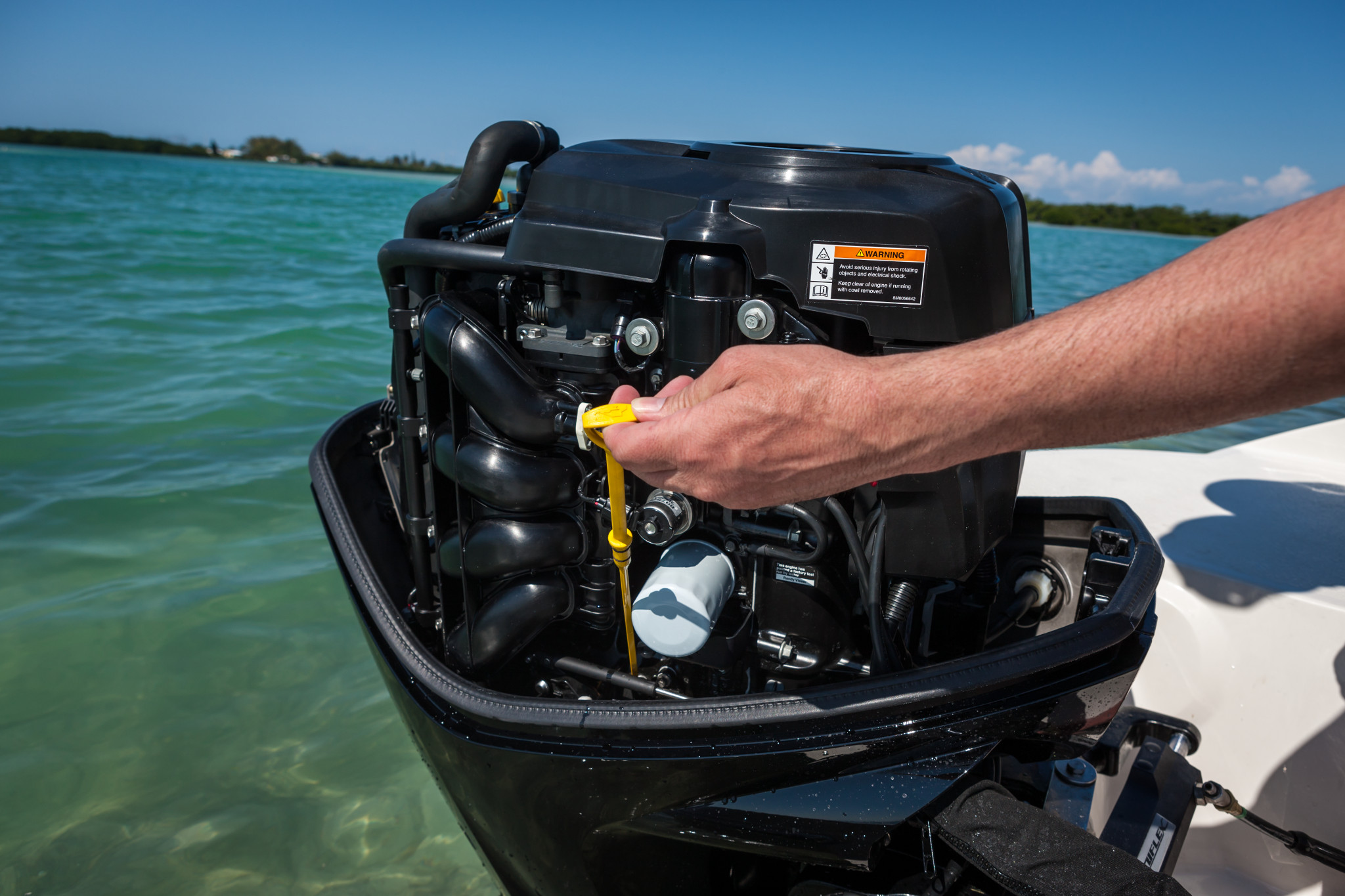
Not every aspect of outboard maintenance requires a trip to the service department. There are several things owners can monitor themselves between scheduled services, and getting into the habit of a quick inspection can help catch problems early.
Before heading out, look for:
- Visible corrosion around the engine, brackets, hardware, and anodes.
- Damage to the propeller, including bends, cracks, or excessive nicks.
- Fishing line around the prop shaft, which can damage seals if left in place.
- Unusual fluid leaks around the engine or lower unit.
- Blocked cooling-water intake ports or debris around the lower unit.
- Loose or damaged wiring and connections.
- Changes in starting, idling, acceleration, or overall engine performance.
- Warning lights, alarms, or messages that weren't present before.
Knowing what your engine normally looks, sounds, and feels like is one of the best maintenance tools you have.
Signs Your Outboard May Need Service
Sometimes an engine doesn't wait for the scheduled maintenance interval to tell you something is wrong. If your outboard starts behaving differently, don't automatically assume the problem will resolve itself. Some common signs include:
Difficulty Starting
A motor that suddenly takes longer to start, requires unusual throttle input, or struggles to maintain an idle deserves attention.
Overheating or Weak Water Flow
A change in the telltale stream, an overheating warning, or an unusual increase in engine temperature can indicate a problem with the cooling system. Don't keep running the engine and hope it clears itself.
Loss of Power
If the engine isn't reaching its normal operating range or suddenly feels sluggish, there may be an issue involving fuel delivery, ignition, the propeller, or another engine system.
Unusual Noise or Vibration
New vibration, rattling, grinding, or other unfamiliar sounds are worth investigating—particularly if they appear suddenly.
Warning Indicators
Modern outboards can provide valuable diagnostic information through warning lights, alarms, or digital displays. Pay attention to them. A warning is much easier to address at the dock than after an engine problem leaves you stranded offshore.
When to Call a Marine Technician
Routine inspections are valuable, but there are times when professional service is the right answer.
If you're dealing with an overheating issue, persistent starting problems, unexplained power loss, electrical problems, fuel-system concerns, gearcase issues, or significant corrosion, a qualified marine technician can diagnose the problem before continued operation turns a manageable repair into a major one.
Professional service is also particularly valuable when your engine reaches a scheduled maintenance milestone.
A technician has the tools, diagnostic equipment, service information, and brand-specific knowledge to perform maintenance that goes well beyond what most owners can reasonably do at the dock.
A Simple Florida Outboard Maintenance Calendar
Florida boaters don't necessarily need a complicated maintenance spreadsheet. A simple rhythm can keep the important tasks from getting lost.
After Every Saltwater or Brackish-Water Trip
- Flush the outboard with fresh water according to the manufacturer's procedure.
- Rinse salt and residue from the exterior.
- Check for visible corrosion or damage.
- Inspect the propeller and lower unit.
Before Regular Use
- Check engine oil and other owner-serviceable fluids.
- Inspect the propeller.
- Check battery condition.
- Look for leaks, corrosion, or damaged wiring.
- Confirm the cooling-water intake is clear.
Throughout the Boating Season
- Pay attention to changes in engine performance.
- Monitor warning indicators and alarms.
- Inspect anodes and corrosion protection.
- Keep fuel fresh and maintain the fuel system.
- Track engine hours so you know when scheduled service is approaching.
Annually or at the Manufacturer's Required Interval
- Complete the scheduled service for your specific outboard.
- Replace filters, lubricants, spark plugs, water-pump components, or other parts as required by the maintenance schedule.
- Have critical systems inspected by a qualified technician when appropriate.
Before Extended Storage
- Flush and clean the engine.
- Follow manufacturer-specific fuel-storage procedures.
- Check fluids and lower-unit lubricant.
- Inspect corrosion protection and anodes.
- Prepare and maintain the battery.
- Follow the manufacturer's long-term storage procedures.
The goal isn't to turn boat ownership into another full-time job. It's to create a routine where the important maintenance happens before you need it.

Final Thoughts
Your outboard is one of the most important pieces of equipment on your boat, and keeping it properly maintained is about much more than protecting an investment. It's about reliability.
Florida gives boaters an incredible range of places to explore, from freshwater lakes and rivers to brackish estuaries and open saltwater. The better you understand how those environments affect your engine—and the more consistently you follow the manufacturer's service schedule—the better prepared your outboard will be for all of them.
Whether you're running a Yamaha, Mercury, or Suzuki, the formula is pretty simple: follow the service schedule, flush after salt and brackish use, pay attention to changes, and address small problems before they become big ones.
Because the best maintenance schedule is the one that keeps your engine ready before you turn the key.
For service, maintenance guidance, parts, and support for your Yamaha, Mercury, or Suzuki outboard, visit Unreel Marine.

